

A FEW RAMBLINGS FROM AN OLD SOUL WITH AN ART BUSINESS
I’m Elaina, the artist and creator of Parks Art Collection. Here on the blog, you’ll find:
-National park travel tips
-Lists of things I wish I knew about running a business
-Honest experiences in various avenues of handmade crafts
-trip itineraries and cost savings
-whatever the heck I feel like

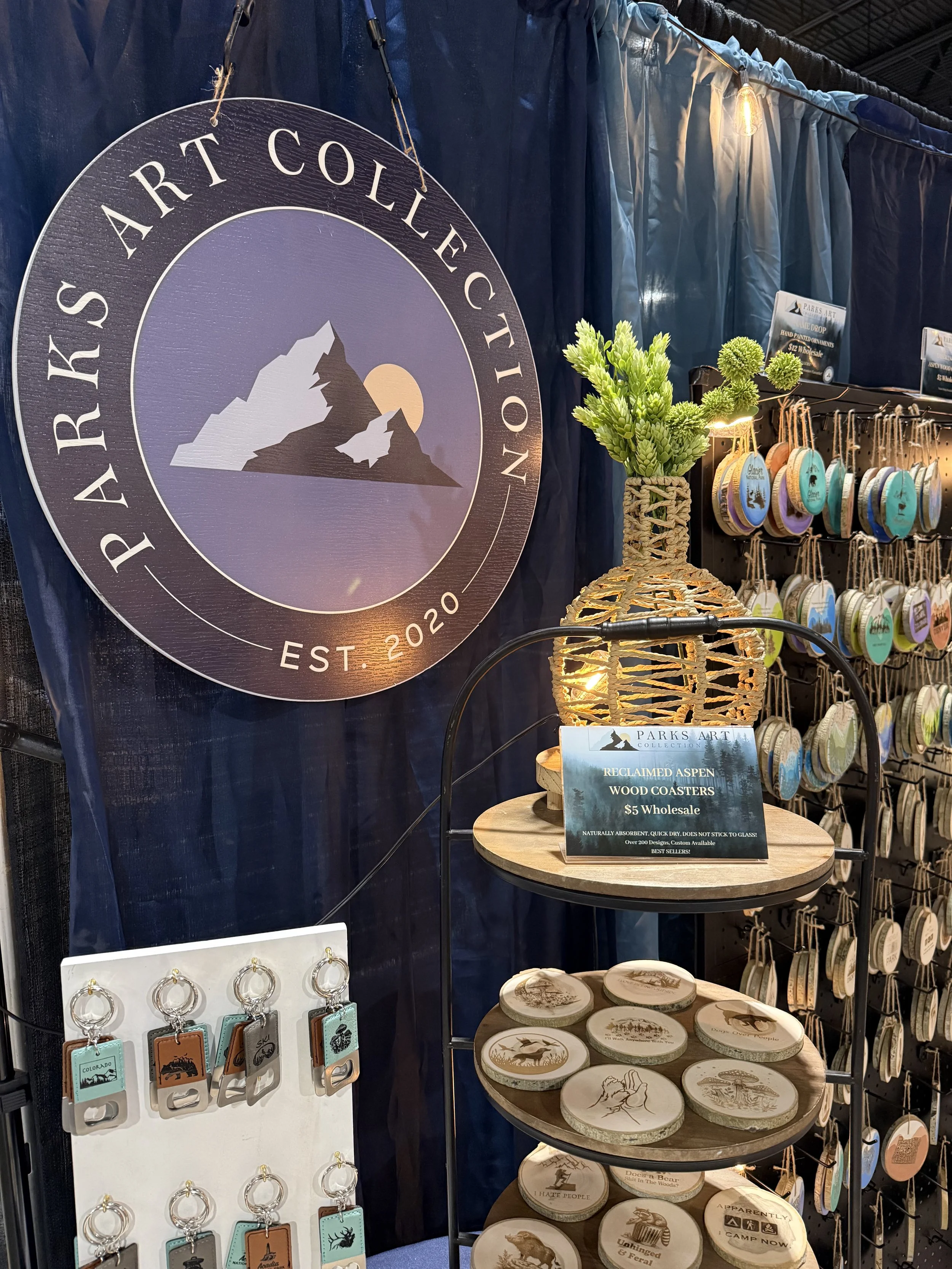
Is Wholesale Right for My Handmade Business? All the Deets for Artists and Crafters!
Are you trying to decide if Wholesale is right for your handmade business? Are you selling at pop-ups and getting tired. I will give you all my basics, my FAQs, pros and cons! I have been selling wholesale with my handmade art for about 2.5 years. Let’s talk about it!
Is Wholesale Right for My Handmade Business?
The down-and-dirty realities of wholesale (from someone actually doing it)
Wholesale gets hyped a lot in the handmade world.
It’s often framed as the magic next step:
Bigger orders
More legitimacy
Less time selling, more time creating
Passive income vibes ✨ (is anything really passive with handmade?)
And listen — wholesale can be amazing.
But it is not a shortcut, and it’s definitely not right for everyone at every stage. I’ve been doing wholesale since 2023 alongside pop-ups, markets, and online sales, and I want to be honest about what it really looks like — especially if you’re a handmade business like mine. I started my Faire catalog when I got COVID for the 2nd time and was quarantined in my Nephew’s bunk bed room for 7 days.
Want to apply to Faire? Check it out:
What wholesale actually means (not the Instagram version)
Wholesale means selling your products to shops at about 50% of retail, so they can sell it in their store at full price. Important note: Faire and Wholesale reps take an ADDITIONAL 15% off the top. So you would be making about 35% of what you would selling retail. Why would anyone do this? Keep reading….
In real terms, that means:
You make less per item
You rely on volume to make it worthwhile
Your pricing, processes, and time management matter a lot
Wholesale is a business model shift — not just “selling more.”
Pros vs Cons, let’s start with the Pros:
1. Larger orders, fewer transactions
Instead of selling 1–2 items at a time, you might ship 24, 48, or 100+ items in one order.
That can mean:
Less customer service back-and-forth
Fewer individual shipments (for anyone who has sold a ton on line or Etsy during the holidays, they know the pain of 50 packages being shipped in 1 night)
More predictable revenue when it’s working
2. Your work lives in cool places
Seeing your handmade work:
in national park gift shops (I wish, these are super hard to get into- more to come on that someday)
supporting other small businesses
in boutiques across the country
3. Repeat buyers (eventually)
Good wholesale accounts reorder.
It might take:
months
a tourist season
or a full year
…but once a shop finds a product that sells well, those reorders can become the backbone of your business.
Now the part people don’t love to talk about— The Cons!!
1. Your margins will feel tight — sometimes painfully tight
If you don’t know your true costs, wholesale will expose that fast.
You have to account for:
materials
packaging
labor
fees (Faire, credit cards, platforms)
mistakes, losses, and learning curves
If you’re already underpricing at retail, wholesale will not magically fix that.
2. You work a lot upfront
Wholesale is front-loaded labor.
You often:
produce a large order
buy materials in bulk
ship it all at once
…and then wait.
Payment terms can mean:
Net 30 (you don’t get paid for 30 days)
platform delays
slow reorders
It’s not instant cash.
3. You don’t control the final customer experience
Once your product is in a shop:
you don’t control how it’s displayed
you don’t control pricing consistency
you don’t control whether staff understands the story
You have to be okay letting go a little. I have found that many artists have a hard time letting go of the control of their work. They become attached to it and can’t handle someone else’s vision or ideas about it. That’s okay. Just important to work on setting boundaries and not taking this personal. Letting go of control can be very freeing in all aspects of life!
4. Not every shop is a dream account
Some stores:
order once and never reorder (in my experience on Faire, this is about 65-75% of accounts never order again)
disappear without explanation (maybe their shop closed, they ghost your emails, who knows)
don’t pay attention to sell-through
Wholesale includes rejection and ghosting — even when your work is good.
What makes wholesale work for me
Wholesale works for my handmade business because of a few very specific things:
My products are small, giftable, and easy to display
I can batch-produce without losing the handmade feel
My designs are location-specific (parks, places, travel)
Tourist shops rely on repeat foot traffic
I still do pop-ups and direct sales to balance cash flow
Wholesale is part of my business, not the whole thing. If you recently saw my revenue pie chart on Instagram, you’ll know that Wholesale was about 21% of my total revenue, so a big part, but not the biggest part.
Signs wholesale might be right for you
Wholesale could be a good fit if:
you can produce consistently and at scale (You might need to hire help!)
your pricing already supports healthy margins
your product solves a retail problem (easy gift, impulse buy, souvenir)
you’re okay trading margin for volume
you want your work in physical stores
Signs it might not be (yet)
Wholesale may not be the move if:
you’re still figuring out pricing
every item is deeply one-of-a-kind
production already feels overwhelming
cash flow is very tight
you hate repetition and batching
The tools, numbers, and resources that actually matter (for me)
I want to get specific here, because vague advice isn’t helpful.
The resources I actually use
Proof to Product podcast – hands down one of the most grounded, realistic resources for product-based businesses and wholesale. It helped me understand pricing, growth stages, and what normal really looks like. Check it Out!
Faire’s educational content – when Faire puts out webinars, seller education, or platform updates, I pay attention. It’s not perfect, but understanding how the platform works helps you make smarter decisions.
The reality of listing products on Faire
I currently have 500+ SKUs on Faire.
That did not happen overnight.
It took me about two years to get everything listed and optimized. And here’s the part people don’t talk about enough:
In reality, about 20 of those same listings sell over and over.
But your bestsellers will carry the business. Don’t be mad if the things that you wish were bestsellers don’t do well. Or if the Bigfoot keeps selling, argh! But you know, people want what they want!
Faire fees (the honest math)
Faire takes:
15% of every order
Plus $10 if it’s a first-time order from a new retailer
Unless: you send a retailer directly using your specific Faire link or QR code
Reorders: what’s actually normal
On Faire, about 25% of my buyers reorder more than once.
That means:
lots of one-off orders
lots of testing from retailers
lots of stores that try something and move on or forget, due to no follow up, maybe?
According to Google and industry data, that’s completely normal.
Where things change dramatically is in-person relationships.
When I meet buyers:
at markets
through direct outreach
via real conversations
The reorder rate is much higher.
I have accounts that have:
ordered consistently for 5–10 seasons
over a 2+ year span
Those relationships are how wholesale becomes predictable, stable, and year-round. That’s the goal.
The emotional reality of wholesale Wholesale is about 95% “no thanks.”
Most people will:
not respond
politely decline
already have something similar
pass without explanation
Some will even:
criticize your work
question your pricing
make comments that sting
You need thick skin to do wholesale. Rejection isn’t a sign you’re doing it wrong — it’s the baseline.
You will need marketing materials (and an easy button)
This is the part that surprises a lot of handmade sellers.
Wholesale isn’t just about having a good product — it’s about making it ridiculously easy for a busy shop owner to say yes.
How are they going to order?
This is the question you must answer clearly.
For me, Faire is the easiest option.
But: not every shop wants to use Faire, some shops can’t get approved, some prefer direct ordering
You need a backup. That’s where line sheets or catalogs come in.
Paper vs digital (what I’m actually seeing)
In reality, most buyers today want things digitally.
They want to: flip through on their phone, skim while standing behind the counter, forward it to a manager or buyer.
Long paper order forms and printed catalogs are becoming less practical.
A clean, digital line sheet or catalog:
keeps their attention
reduces friction
makes follow-up easier
Paper still has a place at shows — but digital is doing the heavy lifting.
Follow-up is a huge part of wholesale
Wholesale doesn’t usually close in one interaction.
It looks like emailing back and forth, touching base after shows, answering quick questions, sending marketing emails.
Businesses are insanely busy.
If you think you’re busy, talk to a shop owner.
They want things to be fast, clear, and low-effort
Find the easy button: Something that lets them order right now, while they’re interested.
Your job is to:
grab their attention
not lose it
remove every possible obstacle
Wholesale works best when ordering feels effortless for them — even if it took you a lot of work to set up behind the scenes.
Inventory, cash flow, and the unglamorous money stuff
This is the part that can make or break wholesale for handmade artists.
You have to invest in inventory
Wholesale assumes you can fulfill volume orders within a reasonable timeframe.
If you’re a handmade business, you can’t make 100 hand‑blown glass ornaments overnight or fire 200 pieces of pottery on demand.
That means you need inventory on hand, cash reserves to produce ahead of time, and systems that let you replicate work efficiently.
Wholesale favors products that can be made consistently, quickly, and without reinventing the wheel every time.
Lead times matter: lead time means, how fast can you ship?
My standard lead time is 7–10 days. OR 2-3 weeks for custom. Neither is wrong — but you must be clear.
Payment terms are a real thing- What does that mean?
Net 30
Net 60
That means: they do not pay upfront OR you may be waiting 30–60 days for payment
Sometimes that also means: following up, tracking invoices, chasing payments
You need basic systems in place
Before you say yes to wholesale, ask yourself: How will I invoice? How can they pay? (credit card matters) Will I charge processing fees? Who pays shipping? What are my order minimums? What are my reorder minimums?Have CLEAR policies in place about all of these!